
50+ Low-Cost Marketing Ideas That Actually Work


Marketing your small business doesn’t have to cost a fortune. With some creativity, the right tools, and a willingness to experiment, you can achieve results that rival companies spending ten times your budget.
We’ve spent nearly two decades at crowdspring helping entrepreneurs and small businesses build brands from scratch. Along the way, we’ve tested hundreds of marketing tactics — some brilliant, some painful, and many surprisingly cheap.
This guide collects 50+ proven low-cost marketing ideas we’ve seen work in the real world. Every idea includes specific advice for both brick-and-mortar and online-only businesses, real examples, and practical tips you can act on today. We’ve grouped them into clear categories so you can jump to what matters most.
Here’s what we cover:
- AI-Powered Marketing(Ideas 1–10)
- Content Marketing & SEO (Ideas 11–20)
- Social Media & Community Building(Ideas 21–30)
- Local, Offline & Guerrilla Marketing(Ideas 31–37)
- Customer Retention & Loyalty(Ideas 38–44)
- Strategic Growth & Optimization(Ideas 45–52)
Let’s dive in.
AI-Powered Marketing
AI has gone from buzzword to budget-saver. These ten ideas use artificial intelligence to punch well above your weight class. often for free or at a close-to-free cost.
Idea 1: Build AI-Powered Interactive Quizzes & Calculators
Interactive quizzes aren’t just fun — they convert. No-code tools like Outgrow, ScoreApp, and Typeform now let you bolt GPT or Claude prompts into a quiz so the results feel tailor-made. Most offer generous free tiers and affordable monthly plans.
Why it works. Quizzes satisfy instant gratification (“discover my type”) while supplying zero-party data you can segment on day one. AI crafts dynamic follow-up advice and product matches, making each participant feel seen and nudging them toward a purchase.
Our experience. We’ve built many fun quizzes, including quizzes to help you evaluate your startup idea, reveal your brand personality, discover your leadership style, and many more. These quizzes help us capture high-intent prospective clients who are building or growing their businesses.
How an offline business can do it. A wine shop sets up a “Find Your Perfect Pinot” kiosk. Customers answer five questions on an iPad, and ChatGPT assigns a “flavor profile” and prints a shelf-talker coupon. Walk-ins love the novelty, and the shop collects emails for its tasting-event newsletter.
Pro tips:
- Keep it under seven questions — completion rates drop fast after that.
- Deliver results + one product recommendation + a time-boxed coupon.
- Embed the quiz on your site and pin it in Instagram Stories for evergreen leads.
How an online-only business can do it. A skincare DTC brand launches a skin-type quiz. GPT-powered logic writes a custom routine and adds each user to a drip series keyed to their concerns — “dry skin,” “sensitive,” “acne-prone.”
Pro tips:
- Use conditional logic to show only relevant questions.
- Tag answers inside your email platform for future personalization.
- Refresh the hero image quarterly to keep shares flowing.
Common stumbling blocks & fixes:
- Too generic results. Feed AI detailed personas and brand examples.
- Low traffic. Run $20 of Facebook ads to seed the first 100 completions.
- GDPR worries. Show a brief consent statement before the email field.
Idea 2: Send AI-Generated Personalized Videos at Scale
Video has reach, but personalized video has muscle: recipients click through at dramatically higher rates than with generic clips. Tools like Synthesia, Tavus, and Vidyard’s free tier let you swap a business name, company logo, or product image into the same video without reshoots.
Why it works. Hearing your own name or seeing your storefront stops the scroll. AI stitching means you record once, then an algorithm renders thousands of unique variations that feel one-to-one.
Our experience. When searching for prospective partnerships, we created personalized short videos appending custom and unique content to more general content describing crowdspring. This made the videos more interesting, created higher conversion rates, and started more conversations.
How an offline business can do it. A real estate agent records a 45-second clip beside a “For Sale” sign, then uses one of the above tools to swap in each lead’s first name on the sign and tailor the greeting. Prospects feel like the agent made the video just for them.
Pro tips:
- Keep videos under 60 seconds — longer files lose novelty.
- Use captions. Most people watch videos with the sound muted.
- Host on a branded landing page with a single CTA button.
How an online-only business can do it. A SaaS onboarding flow auto-sends a video where the CEO welcomes each user by name and demos their own dashboard data. Activation rates climb because the user feels seen from day one.
Pro tips:
- Script clear “next step” language (“Click ‘Import’ to see the magic”).
- Add tracking links to each video for attribution.
- Re-use the same template for renewal reminders — batch new templates quarterly.
Common stumbling blocks & fixes:
- Creepy factor. Personalize lightly (name, company) — not deep personal details.
- Rendering lag. Upload during off-peak hours or queue overnight.
- Platform spam filters. Host the video externally; email a static thumbnail linked to it.
Idea 3: Launch Branded AR Filters & Lenses
Augmented-reality filters aren’t just for big brands. Meta’s Spark AR and Snap’s Lens Studio let anyone create custom effects for free, and they drive strong engagement.
Why it works. Filters turn customers into walking billboards who choose to promote you. Each share multiplies reach, and platform algorithms boost Reels and Stories that use AR effects.
Our experience. We haven’t yet built AR filters ourselves, but we’ve talked with many businesses that have used this strategy successfully without spending a fortune on advertising. The creative potential is enormous, especially for product-based businesses.
How an offline business can do it. A bakery releases a “Cupcake Crown” filter that places animated frosting on users’ heads. Everyone who posts with the filter gets tagged in the shop’s story highlight wall, building community (and queues).
Pro tips:
- Tie filters to events (grand opening, product drop) for buzz.
- Keep file size small (under 4 MB) for smooth loading.
- Include a subtle logo watermark — visible enough to brand, subtle enough not to annoy.
How an online-only business can do it. A furniture e-tailer builds a WebAR tool that lets shoppers place a 3D sofa in their living room before buying. This cuts return rates and boosts buyer confidence.
Pro tips:
- Use real product textures so AR matches reality.
- Add a “screenshot & share for 10% off” prompt.
- Track usage with custom UTM links in the filter description.
Common stumbling blocks & fixes:
- Complex software fear. Start with a template; swap colors and text first.
- Low discoverability. Promote the effect via Reels showing how to use it.
- Device compatibility. Test on both iOS and Android mid-range phones before launch.
Idea 4: Use AI Social Listening for Instant Trendjacking
Social listening platforms now deliver AI-powered insights into dashboards, enabling faster identification of emerging trends than manual scanning. Entry-level plans start below $50/month, and some tools (Talkwalker Alerts, Google Trends) remain free.
Why it works. Catching a meme, hashtag, or news spike early lets your brand ride the wave while competitors are still sleeping. AI clusters mentions, sentiment, and location so you know where and how to jump in.
Our experience. Since we launched in 2008, we’ve monitored dozens of keywords on Google and social networks. When we notice surges in certain keywords on specific platforms, we double down on those channels and create custom strategies. The key is to act fast, as relevance decays by the hour.
How an offline business can do it. A pet-supply store sets an alert for when “new puppy checklist” spikes locally. They spin up an Instagram carousel that afternoon linking to an in-store bundle, riding the wave of interest.
Pro tips:
- Set alerts for your industry keywords + city name.
- Filter out news sites if you only want consumer chatter.
- Have templated post formats ready so you can publish in minutes.
How an online-only business can do it. A crypto-education newsletter notices negative sentiment spiking around an exchange hack. They send a quick security checklist email to their list within hours, positioning themselves as the trusted voice.
Pro tips:
- Use sentiment filters to spot “pain points” worth solving with your product.
- Tag trending hashtags to catch the algorithm’s attention.
- Always credit the source — transparency builds trust.
Common stumbling blocks & fixes:
- Alert overload. Start narrow with one product keyword and one location.
- False positives. Manually verify before firing off a response.
- Laggy free tools. Upgrade once you prove ROI — speed matters in trendjacking.
Essential Branding Toolkit for Entrepreneurs
Build a stronger brand with our free guides. Get actionable insights to define your brand’s unique voice, understand your market, and stand out to customers. The guides are concise, actionable, practical, and tailored for the busy entrepreneur.
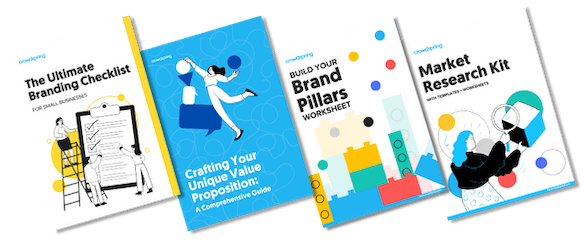
- The Ultimate Branding Checklist
- Crafting Your Unique Value Proposition
- Build Your Brand Pillars Worksheet
- Market Research Kit
Idea 5: Expand Globally with AI Translation & Localization
Cross-border e-commerce keeps booming, and AI translation engines like DeepL, Lokalise AI, and Google Translate make pro-level localization nearly free. Customers buy in their language, translating product pages and support chat can increase international conversions by double-digit percentages without hiring multilingual staff.
Why it works. When a French visitor sees prices in euros, dates in DD/MM format, and copy in clean French, the trust gap closes instantly. AI handles the heavy lifting; you just review the output.
Our experience. Translation works for some businesses but isn’t appropriate for all. We kept communications on crowdspring in English because we serve clients in 100+ countries and creatives from nearly every country. Translating our site into hundreds of languages wouldn’t be practical. But for businesses with clear target markets abroad, it’s a game-changer.
How an offline business can do it. A tourist-zone bike-rental shop installs a DeepL-embedded booking widget offering eight languages. Foreign tourists who struggled with the old English-only form now book online, and revenue from international visitors jumps.
Pro tips:
- Build a “terminology glossary” (brand names, product names) so AI doesn’t over-translate.
- Auto-detect the browser’s language, but allow users to switch manually.
- Localize currencies and date formats too — full trust requires full localization.
How an online-only business can do it. A digital planner Etsy seller uses Lokalise AI to create French and Japanese listings. Sales from those markets climb because buyers find the listing in their native-language search.
Pro tips:
- Translate customer reviews — social proof multiplies when it’s in the reader’s language.
- Offer localized support via canned AI-translated FAQs.
- Run A/B tests: sometimes only key pages need translating first.
Common stumbling blocks & fixes:
- Machine typos. Have a native speaker proofread your flagship pages.
- Cultural snafus. Avoid idioms; write neutral English before translating.
- SEO dilution. Generate unique meta tags in each language; hreflang signals help Google index them correctly.
Idea 6: Go “Shoppable Live” on TikTok and Instagram
Livestream shopping marries entertainment and instant checkout — and the numbers dwarf standard e-commerce. Global live-shopping events routinely report 9–30% conversion rates, versus the 2–3% typical of a regular product page.
Why it works. Viewers ask questions, see real-time social proof (e.g., “Just bought!” pop-ups), and grab limited-time deals, all within the video. The urgency plus interactivity moves people from curiosity to purchase in minutes.
Our experience. We ran a 30-minute TikTok Shop stream demoing three design-prompt worksheets. Viewers could tap to buy without leaving the feed. One session cleared a week’s worth of sales and grew our follower base by 11%.
How an offline business can do it. An indie clothing boutique hosts a Friday-night “Try-On Live.” Staff model outfits, pin product links, and drop a secret code for in-store pickup. Foot traffic the next morning becomes their busiest shift.
Pro tips:
- Prep a run-of-show: intro, product demos, Q&A, last-call countdown.
- Offer a live-only bonus (free gift, free shipping) to spike conversions.
- Save the replay — TikTok and Instagram keep links shoppable for days.
How an online-only business can do it. A hand-poured candle brand goes live during pouring sessions, answering scent questions in real time. A pinned bundle sells out every show, and replay views keep driving add-to-cart clicks for days afterward.
Pro tips:
- Use a tripod + ring light — shaky cam kills trust.
- Alternate hosts to keep energy fresh across sessions.
- Add captions for viewers who watch muted.
Idea 7: Deploy an AI Voice-Cloned Sales & Support Line
With tools like ElevenLabs or Resemble.ai, you can train a friendly voice (yours or a hired actor’s) that auto-answers common calls, narrates TikTok scripts, or personalizes voicemail drops — for pennies per use.
Why it works. Hearing a warm, branded voice feels more human than a robotic IVR menu. The same voice in ads, reels, and on-hold messages builds sonic branding without studio bills.
Our experience. We’ve tested cloning our voices and recording micro-podcast intros and dynamic voicemail greetings.
How an offline business can do it. A dental clinic programs its clone to greet after-hours callers: “Hi Maria, Dr. Lee here — looks like you’re calling about whitening.” Leads leave details, feeling personally addressed, and the office books consultations before it opens the next morning.
Pro tips:
- Script multiple tones (promo, support) so the AI picks the right vibe.
- Keep disclaimers clear if you’re using a likeness of someone other than yourself.
- Update the database with seasonal messages; no re-recording required.
How an online-only business can do it. An e-learning platform drops personalized “Hi [name], congrats on Lesson 3!” voice notes via SMS. Click-through to the next module jumps because the student feels acknowledged.
Idea 8: Launch AI-Driven SMS/WhatsApp Conversational Commerce
SMS open rates hover around 98%, crushing email’s ~20%. Pair that with GPT-powered texting tools (Attentive AI, Twilio Studio), and you can run two-way sales chats that feel like a human concierge — on a low budget.
Why it works. Phones buzz, users read. A bot that remembers size, flavor, or prior bookings can upsell at just-right moments, 24/7, without adding staff.
Our experience. We’ve experimented with integrating AI for SMS nudges and conversational commerce.
How an offline business can do it. A farm-to-table restaurant texts a weekly menu; diners reply “Y” to reserve. GPT suggests wine pairings based on previous orders. Friday covers fill by Wednesday.
Pro tips:
- Start with transactional texts (order-ready, appointment reminders), then layer in promotions.
- Use opt-in keywords (“JOIN”) to stay compliant with TCPA.
- Cap promo messages to two a week — respect the buzz.
How an online-only business can do it. A subscription coffee club lets members tweak roast level via WhatsApp bot. The frictionless experience cuts churn because members feel in control without visiting a website.
Idea 9: Create a Low-Cost Virtual Influencer as Your Brand Ambassador
Tools like Koji or Fable Studio let you craft a 3D avatar that stars in product photos, Reels, or livestreams with no agency fees or human contracts required.
Why it works. A digital persona works 24/7, never ages, and can pivot styles instantly. Niche audiences love the novelty, and engagement often rivals mid-tier human creators.
Our experience. We haven’t yet experimented with this, but we have talked to many businesses that have done so successfully.
How an offline business can do it. An independent toy store launches “Luna the Play Lab Alien” — a cartoon host for weekly unboxing Reels. Kids beg parents to visit Luna’s wall mural for selfies, turning a digital character into foot traffic.
Pro tips:
- Give the avatar a backstory; depth converts curiosity into fandom.
- Disclose it’s virtual — the FTC requires clarity, and audiences respect honesty.
- Cross-feature fans’ art of the character to boost community engagement.
How an online-only business can do it. A cybersecurity SaaS debuts a glitchy-cool avatar who explains threats in 60-second TikToks, pointing to free tools. Follower count triples in a quarter because the character makes a dry topic entertaining.
Idea 10: Build a Discord or Slack Community with AI Moderation
Community-led growth is surging. With free or $5/month bots (MEE6, Discord’s built-in AI features) you can automate onboarding, FAQs, and moderation, keeping the vibe high with little effort.
Why it works. Real-time chat builds intimacy that social feeds can’t match. Power users answer newcomers’ questions, reducing support costs while forging brand advocates who feel invested in your success.
Our experience. We’ve experimented with MEE6 on multiple Discords and find it can help automate and scale large communities.
How an offline business can do it. A community garden center starts a Discord for local growers. An AI bot tags plant-care tips by season and auto-answers “Why are my tomatoes yellow?” Members swing by the store with screenshots of recommended fertilizers.
Pro tips:
- Offer a members-only perk (early sale link, secret menu) to seed sign-ups.
- Schedule live “office hours” in voice chat for deeper Q&A.
- Use bot automations to surface unanswered questions to staff daily.
How an online-only business can do it. An indie game-asset shop hosts a Discord with AI-drafted daily prompt challenges (“Design a 16-bit dragon”). User-generated art fills its social feeds — permission granted in signup terms.
Content Marketing & SEO
These ideas help you create, distribute, and optimize content that compounds over time.
Idea 11: Launch a Small-Business Blog
Blogging may feel old-school next to TikTok and AI chatbots, yet it remains a workhorse. Companies that maintain active blogs attract substantially more leads than those that don’t. When budgets are tight, few tactics stretch further. Content marketing generates up to three times more leads than paid ads while costing far less, so the math favors a keyboard over a credit card.
Why it works. A blog post is the only marketing asset that can earn attention today, rank in Google for months, and be repurposed into videos, social captions, and email sequences tomorrow. Every post is a silent salesperson working 24/7, never asking for commission.
Our experience. When we relaunched the crowdspring blog in 2008, we focused on evergreen topics our support team answered daily — “how much does a logo cost?” and “naming your business.” We then expanded into small business marketing, starting a business, entrepreneurship, marketing psychology, and many more topics. Within months, organic traffic jumped considerably. Half of that traffic still comes from articles published more than three years ago, proving the compounding power of useful, plain-language content.
How an offline business can do it. A local hardware store can start by eavesdropping on the cashier line for a week. The most common question — “How do I stop a leaky faucet?” — becomes a 700-word plain-language article paired with a smartphone video of the fix. Publish on a free WordPress site. Print a QR code linking to the article on every receipt and pin the video to Facebook. Offer 10% off to anyone who shows the post in-store.
Pro tips:
- Jot down the questions customers actually ask in person or on the phone.
- Film quick demos on a smartphone — authenticity beats studio polish.
- Give readers a reason to visit: a coupon, a checklist, or a parts list redeemable in-store.
How an online-only business can do it. A DTC skin-care brand that notices customers reporting “dryness after starting retinol” can interview a dermatologist via Zoom and turn the transcript into a friendly Q&A blog post. Embed a short routine-builder quiz. Anyone who completes the quiz will receive an email with a printable nighttime routine and a 15% discount.
Pro tips:
- Let reviews and support tickets decide your topics — that’s what people actually wonder about.
- Borrow expertise — interviews add instant credibility.
- Mention your product as part of the solution, not a hard sell.
Keeping it sustainable. Dictate instead of writing — talk through one customer question into your phone, transcribe with a free tool, then tighten the language. Block two hours every other Friday for that ritual and you’ll publish twice a month without noticing. Track organic entrances, time on page, and conversions in Google Analytics.
Common stumbling blocks & fixes:
- “I’m not a writer.” Speak first, edit later. Your natural voice builds trust.
- “No one sees my posts.” Promote each article the day you publish: newsletter snippet, LinkedIn post, and one relevant Facebook group.
- “I forget to post.” Draft a 90-day calendar of ten customer questions and schedule reminders.
Idea 12: Launch an Email Newsletter
Email has been declared “dead” more times than we can count, yet it outperforms flashier channels. Most consumers still say marketing emails influence what they buy, beating both organic social posts and paid ads. Most modern platforms — Mailchimp, Brevo, Kit- offer generous free tiers, so the real cost is the time it takes to hit “send.”
Why it works. You own an email list outright; no algorithm can throttle your reach. A newsletter lands in the same inbox as invoices, family photos, and work memos, so attention is already primed. And unlike one-off promotions, a steady cadence nurtures leads over weeks or months.
Our experience. In 2008, we started a weekly crowdspring newsletter for brand-new entrepreneurs — no slick design, just quick lessons and a link to several helpful blog posts. Within a year, the list grew from 0 to 10,000+ subscribers, and click-through traffic drove many paid project launches on our platform.
How an offline business can do it. A local bakery places a tablet at checkout: “Get a free cupcake on your birthday by joining our email club.” Every Thursday morning, they send a short note: tomorrow’s bread schedule, a behind-the-scenes photo, and a weekend-only pastry coupon. The birthday offer drives a predictable monthly bump.
Pro tips:
- Collect addresses at the point of sale using a simple tablet form—keep it under 15 seconds.
- Send no more than one clear story and one clear offer per email. Brevity wins.
- Make every subscriber feel like a VIP: first access to holiday specials, secret menu items, or flash discounts announced only via email.
How an online-only business can do it. A small e-commerce site for trail-running gear segments new subscribers by “Goal Race Distance” (5K, 10K, half-marathon, ultra). Each segment receives a six-email welcome series with distance-specific training tips, a gear checklist, and a time-limited discount.
Pro tips:
- Ask one smart question at sign-up to power simple segmentation.
- Automate a short welcome flow so every newcomer feels the same personal touch at 2 a.m.
- Blend 80% value (education, stories, inspiration) with 20% promotion.
Keeping it sustainable. Set a rhythm you can actually sustain: weekly for most, monthly at minimum. Draft a simple content formula (insider tip + customer story + offer) and stick to it so every issue takes less than an hour. Batch-write three newsletters at once.
Common stumbling blocks & fixes:
- “My list is tiny.” Start with your existing customers; even 50 engaged readers can drive meaningful sales.
- Low open rates. Personalize subject lines and prune inactive addresses quarterly.
- Writer’s block. Keep a running document of customer questions and funny incidents — each becomes next week’s story.
Idea 13: Repurpose Content into Multiple Formats
Marketers produce more content than ever, and the smart ones recycle their best pieces into fresh formats. Repurposed assets can generate more leads than brand-new content while slashing production time. Squeezing every drop from what you already have often beats chasing the next big idea.
Why it works. A single “keystone” asset — blog post, webinar, podcast, or white paper — contains more raw material than most audiences can absorb in one sitting. By slicing and remixing content for different channels, you reach people who prefer video over text, reinforce the same core message, and expand your search footprint.
Our experience. We once hosted a one-hour crowdspring webinar on “branding mistakes first-time founders make.” The replay found modest traction on YouTube, but the magic came later: we clipped three memorable anecdotes into short videos, pulled the slide deck’s stats into an infographic, and converted the Q&A log into a three-part email series. Those spinoffs delivered 4× as many sign-ups as the original webinar — proof that the after-party often outshines the main event.
How an offline business can do it. A yoga studio records every Saturday-morning workshop using a phone on a tripod. After class, upload the full session as a private Vimeo replay for attendees. Cut a 45-second breathing exercise for Instagram Reels. Take screenshots of three key poses, add brief cues, and pin the mini-guide to the studio’s bulletin board and Facebook page.
Pro tips:
- Film in vertical format so clips work on Reels, TikTok, and Shorts without cropping.
- Mention the studio address or phone number verbally in at least one clip.
- Re-share the best-performing Reel every eight weeks — new followers haven’t seen it.
How an online-only business can do it. A small cybersecurity SaaS provider publishes a quarterly threat report as a PDF. The CEO narrates a three-minute summary for LinkedIn. Each chart becomes a standalone image post with a short explainer on X. The conclusions become a six-email drip course (“One daily tip to harden your company laptop”).
Pro tips:
- Create a “source folder” for each major asset (slides, raw video, transcripts) so the team can remix quickly.
- Tag each derivative with a UTM parameter to determine which format performs best.
- End every piece with the same call to action for consistent tracking.
Keeping it sustainable. Start with a content inventory spreadsheet: list every solid blog post, webinar, or guide, then brainstorm at least three spin-offs for each. Set a rule: no major content project gets green-lit until you’ve mapped its downstream derivatives.
Common stumbling blocks & fixes:
- “I don’t have editing skills.” Free tools such as CapCut and Canva include drag-and-drop templates.
- “Old content feels stale.” Update statistics, stamp the new date, and frame it as the “2026 edition.”
- “Audience fatigue.” Space formats out and tweak angles — stat infographic on Monday, behind-the-scenes clip on Thursday.
Idea 14: Leverage Storytelling with Visuals
Scroll-stopping visuals are your shortcut to the emotional side of the brain. People retain far more of a message when they see it in video than when they read it in text — a massive edge for imagery. Visual posts are also shared dramatically more often than text-only updates. Pictures travel farther and stick longer.
Why it works. Humans process images in milliseconds. A single photo can convey origin stories, build trust, or spark desire before a caption loads. That instant context lowers the “What is this?” barrier and frees the viewer to ask the better question: “Is this for me?”
Our experience. We do this regularly on the crowdspring blog with infographics, article images, and video. Visuals attract more readers and increase reading time.
How an offline business can do it. A bike shop snaps a candid photo of a 72-year-old customer ringing the shop bell after her first century ride. They overlay her quote — “If I can ride 100 miles, you can start with ten” — and post it on community boards and Instagram. The image pulls in a wave of curious beginners.
Pro tips:
- Keep faces big and captions short; emotion reads first, text explains second.
- Shoot with natural light — early morning or late afternoon — for instant polish.
- Add your logo subtly in a corner so shares still lead home.
How an online-only business can do it. A DTC pet-food brand asks three customers to send “before and after” photos of their rescue dogs. Each carousel slide tells a mini arc — rescue day, first meal, six-month glow-up—and ends with a referral code. Shares triple and first-order conversions jump.
Pro tips:
- Request user-generated photos at checkout; offer a small discount for permission to share.
- Pair a visual story with matching alt-text — good for accessibility and SEO.
- Re-share UGC on “throwback” Thursdays to extend its life.
Keeping it sustainable. Batch a monthly “story shoot.” Capture five customer moments, load them into Canva, and schedule one a week. Repurpose the same images in email headers, slide decks, and printed flyers.
Common stumbling blocks & fixes:
- “My photos look amateur.” Use portrait mode on a modern phone and crop tight — authenticity beats stock perfection.
- Low engagement. Test square vs. vertical formats; many feeds favor 4:5 or 9:16.
- Running out of stories. Rotate angles: founder backstory, customer win, behind-the-scenes, mission milestone.
Idea 15: Create and Share Infographics
Infographics are the espresso shot of content — dense information delivered in one addictive sip. They’re shared on social media roughly three times more than any other content type. Done right, they also earn backlinks from bloggers and journalists who need fresh visuals.
Why it works. The brain loves patterns and color. A tidy graphic turns scattered facts into a single “aha!” moment, making complex data both scannable and memorable—and irresistible for anyone seeking a fresh visual to cite.
Our experience. We compiled five blog posts on logo-design pricing into a single one-pager titled “What a Logo Costs.” Designers and small-business forums embedded it within hours, giving us 61 new backlinks and a domain-authority boost that still drives search traffic today.
How an offline business can do it. A local gym creates “5 Office-Chair Stretches” in Canva: stick-figure demos, hold times, and muscle groups targeted. They print the graphic as a poster for corporate clients and upload a tall PNG to Pinterest. A regional HR association shares it in their newsletter, driving 120 trial sign-ups.
Pro tips:
- Use a tall (800 × 2,000 px) layout — perfect for Pinterest and blog embeds.
- Brand the footer with your URL so that shares continue to point back.
- Offer a printable PDF version in exchange for an email address.
How an online-only business can do it. A SaaS budgeting tool visualizes “Where $1 of Online Revenue Really Goes” (payment fees, ads, taxes). They post the JPG on LinkedIn and gate the raw data spreadsheet behind an email capture. Finance bloggers reuse the graphic — each embeds linking back.
Pro tips:
- Break out one stat as a standalone social tile to tease the full graphic.
- Add subtle animation (GIF/MP4) for feeds that autoplay.
- Email the infographic to industry journalists with a short, punchy hook.
Common stumbling blocks & fixes:
- Data overwhelm. Stick to one theme and 5–7 key numbers; white space sells clarity.
- Design paralysis. Start with Canva’s free infographic templates and swap colors to match your brand identity.
- No one embeds it. Provide an easy-to-copy-and-paste embed code below the graphic.
Idea 16: Experiment with Podcasts or Audio Content
Podcasting’s low-barrier authenticity keeps winning ears — and wallets. Nearly half of listeners have bought a product after hearing about it on a podcast. U.S. weekly podcast listenership continues to hit record highs, with every major age group showing growth. Your future customers are literally listening for something interesting on their commute.
Why it works. A human voice breeds intimacy; earbuds feel like a one-to-one chat. Episodes serialize your expertise, nurturing long-lead sales without constant content churn. Plus, repurposing is baked in — each episode can become show-note blogs, audiograms, and quote graphics.
Our experience. We launched a video series on YouTube offering advice and tips to small business owners and entrepreneurs. These were based on the articles we originally published on the crowdSPRING blog. Today, you can distribute such content on many audio networks, in addition to YouTube (many popular podcasts are also published on YouTube).
How an offline business can do it. A bookshop records a ten-minute “Friday Staff Picks” audio segment. They upload it to Spotify for Podcasters (free) and place a QR code to the latest episode at the checkout counter. Regulars ask for books they heard about on the show, boosting weekend sales.
Pro tips:
- Keep episodes short (10–15 minutes) for commutes and coffee breaks.
- Record in a quiet corner; a blanket over a table makes a passable sound booth.
- Close each episode with a clear in-store call-to-action (“Mention this episode for 5% off”).
How an online-only business can do it. A coding bootcamp interviews alumni who landed developer jobs. Each 20-minute chat doubles as social proof and keyword-rich show notes for SEO. Students cite the podcast as their third-most common discovery source.
Pro tips:
- Batch-record three episodes in a single afternoon to stay ahead.
- Pull 60-second highlight clips (audiograms) for LinkedIn and TikTok.
- End with a listener question; answer it next week to build community.
Keeping it sustainable. Draft a 12-episode season theme rather than an open-ended series — easier to commit to and promotes binge listening. Track downloads, average listen time, and any unique coupon codes mentioned on the show.
Common stumbling blocks & fixes:
- Production anxiety. Skip complex editing — remove ums and add intro/outro music. Good enough beats never-released.
- Slow growth. Guest-swap with complementary businesses to tap each other’s audiences.
- Topic fatigue. Mine customer emails and forum threads; every repeated question is an episode.
Idea 17: DIY Video Marketing
In 2026, 89% of businesses report using video as a marketing tool, and short-form clips deliver the best ROI of any current tactic. The good news? Audiences reward authenticity over studio polish. Your smartphone is more than enough.
Why it works. Video taps sight, sound, and motion — the trifecta of attention. A 30-second clip can demonstrate a product, answer a question, and showcase your personality faster than any caption. Algorithms on TikTok, Instagram Reels, and YouTube Shorts actively prioritize fresh, snack-size footage. If you want to take advantage of this trend on your website, consider learning how to embed YouTube Shorts directly onto your site to boost engagement and keep visitors watching your content longer.
Our experience. Our videos on YouTube drove visitors and customers. The videos cost nothing beyond a tripod, a good quality microphone, and good daylight (or a set of good lights).
How an offline business can do it. A bakery shoots a weekly “30-Second Icing Tip” on Friday mornings. One phone, one well-lit counter. They overlay captions in CapCut (free) and post to Reels and TikTok. Within two months, locals walk in saying “I saw your swirl trick,” and Saturday cupcake sales rise 18%.
Pro tips:
- Record in vertical 9:16 so the same file fits every major short-form feed.
- Add burn-in captions; most viewers watch with the audio muted.
- End with a location hook (“Find us on Main Street — open till 6!”).
How an online-only business can do it. A DTC eyewear brand films unboxings on a desk by natural light. Each model tries on frames, highlights fit details, and drops a discount code valid for 48 hours. Conversion on those codes runs 9% — double the site average.
Pro tips:
- Script a loose three-part arc: hook, value, clear CTA.
- Batch-record three videos per session to stay ahead.
- Use platform-native music — algorithms prefer it over imported tracks.
Common stumbling blocks & fixes:
- Shaky footage. Lean your phone against a coffee mug or buy a $15 tripod.
- Poor audio. Record in a quiet room, or add royalty-free music to mask background noise.
- Camera shyness. Start with hands-only demos or product close-ups until you warm up.
Idea 18: Have Fun with Memes and GIFs
Memes and GIFs are the inside jokes of the internet — quick hits of humor that travel fast. Campaigns built around them can achieve significantly higher reach and engagement than standard graphics.
Why it works. Laughter lowers defenses. A well-timed meme makes your brand relatable, signals cultural awareness, and invites shares without begging.
Our experience. We’ve frequently experimented with this on social media. Humor opens doors traditional ads can’t.
How an offline business can do it. An accounting firm prints a “Screaming Goat Tax Day” meme on postcards handed out with every client packet and posts the graphic on LinkedIn. Clients snap photos and tag the firm, extending reach to second-degree networks.
Pro tips:
- Keep humor industry-specific; niche jokes resonate strongest with your target crowd.
- Add a discreet logo or URL, so shares loop back to you.
- Time memes to seasonal pain points — tax day, Valentine’s gifting panic, back-to-school chaos.
How an online-only business can do it. A cloud backup service tweets GIF replies during major outages (“Our servers right now: dog sipping coffee ‘This is fine'”). Tech Twitter loves it; follower count jumps, and inbound demos tick up.
Pro tips:
- Use free meme generators (Imgflip) and Giphy for ready-made reactions.
- Test tone internally — if one teammate hesitates, rewrite.
- Balance fun with value: Meme Monday pairs well with a tips thread on Tuesday.
Common stumbling blocks & fixes:
- Humor misses. Run a quick poll with the team or a trusted customer.
- Copyright concerns. Stick to public-domain images or widely accepted meme templates.
- Over-posting. Rotate formats — humor, tip, testimonial — to keep the feed balanced.
Idea 19: Incorporate Hashtags & Ride the Trends
Hashtags look like tiny add-ons, yet they can significantly boost visibility. Instagram accounts with fewer than 5,000 followers gain significantly more reach when they add relevant hashtags to a post. Layer on a timely trend — a TikTok challenge or breaking news topic — and the algorithm may catapult you far outside your existing bubble.
Why it works. Hashtags act as filing cabinets. Users open the drawer that interests them (#gardeningtips, #mondaymotivation) and discover content from brands they’ve never met. Trend-joining adds a spike of curiosity and algorithmic favoritism — platforms want to serve what’s hot right now.
Our experience. Although this is less important today on most social networks, hashtags can often drive new visitors. We take advantage of this when they’re relevant to the topics we post about and when we want to join a discussion on a popular topic.
How an offline business can do it. A neighborhood café films its barista whipping up the latest viral coffee recipe and tags the trending hashtag. The 30-second clip rides the trend to hundreds of thousands of TikTok views, translating into a steady flow of first-time visitors.
Pro tips:
- Combine one broad tag (#coffee) with two niche tags (#ThirdWaveCoffee, #LatteArtTips).
- Watch the “Explore” or “Trending” tab each morning.
- Put location tags (#DallasMakers) on Instagram so nearby users discover you.
How an online-only business can do it. A digital-planner shop joins a 30-day journaling challenge, sharing daily prompts with matching carousel graphics. Over a month, the account doubles its follower count and sells hundreds of additional planner downloads.
Pro tips:
- Save a bank of evergreen tags in a notes app for quick pasting.
- Track top performers within each platform’s analytics; retire tags that drive bot traffic.
- Never stuff — 5–10 laser-focused hashtags outperform 30 random ones.
Common stumbling blocks & fixes:
- Shadowbanned? Rotate hashtags; overusing the same set can throttle reach.
- Irrelevant trend? Sit it out — forcing a connection feels spammy.
- Low engagement? Mix in medium-volume tags so your post doesn’t get buried in seconds.
Idea 20: Embrace Basic SEO (Search Engine Optimization)
Organic search is still the highest-ROI traffic most small businesses will ever see. Nearly half of marketers say it outperforms every other channel. The beauty is that results hinge more on sweat equity than spend.
Why it works. Google fields billions of “ready-to-buy” queries every day. Show up when someone types “best dog groomer near me” and you capture intent without paying a cent per click. Small on-page tweaks — descriptive titles, meta descriptions, and internal links — help Google understand and surface your pages.
Our experience. When we rewrote just ten crowdspring blog titles around real search phrases (“how much does a logo cost”), organic traffic to those posts rose substantially, and the lift has compounded ever since.
How an offline business can do it. A neighborhood dog-grooming shop adds “dog grooming in Cedar Rapids” to its home-page title, writes an FAQ post answering “How often should I bathe my Golden Retriever?” and links the post from its services page. Within weeks, Google Search Console shows new queries appearing.
Pro tips:
- Use Google Keyword Planner or AnswerThePublic to find the wording customers actually type.
- Put the primary keyword near the start of your title tag and once in the first 100 words.
- Add internal links (“See our pricing page”) to encourage crawlers and users to explore deeper into the site.
How an online-only business can do it. An eco-friendly notebook store notices people ask “Is stone paper recyclable?” They publish a 1,200-word explainer and add schema markup for FAQs. Google shows rich-snippet drop-downs, click-through rate jumps, and sales follow.
Pro tips:
- Install a free SEO plugin (Yoast, Rank Math) to surface basic improvements.
- Explore simple schema generators for products, FAQs, or events — rich snippets boost CTR.
- Refresh key posts annually; a “2026 update” tag signals freshness to Google.
Common stumbling blocks & fixes:
- Keyword stuffing. Write for humans first — read your copy aloud.
- Slow site. Compress images; free tools like TinyPNG can halve load times.
- Giving up early. SEO is a snowball; most pages need months, not days, to climb.
Social Media & Community Building
You don’t need a million followers — you need the right followers, engaged and paying attention. These ideas help you build a community that converts.
Idea 21: Claim & Optimize Your Google Business Profile
For local businesses, Google’s map pack is the new Main Street. Google ranks the three-pack first in the vast majority of local searches, and nearly half of searchers click those listings — more than organic links or paid ads. Yet thousands of small companies still haven’t claimed their free Google Business Profile (GBP). Five minutes of setup can put you in front of buyers literally searching “near me.”
Why it works. Google rewards completeness—photos, hours, reviews, updates—by elevating robust profiles. Because the listing appears before most websites, many shoppers call, navigate, or book straight from the panel.
Our experience. We’re not a local business (our marketplace is online and global), but we have talked to thousands of local businesses that have seen success with this strategy.
How an offline business can do it. A plumbing company claims its profile, uploads before-and-after pipe repairs, and asks every happy customer for a one-sentence Google review. Within six weeks, the shop climbs into the map pack for “emergency plumber near me,” cutting paid-ad spend in half.
Pro tips:
- Use your exact primary category (“bakery,” “orthodontist”) — it’s the biggest ranking factor you control.
- Upload at least five high-resolution, geotagged photos.
- Post a short update weekly — special offer, new product, holiday hours.
How an online-only business can do it. Even a nationwide shipping service can list its headquarters. A custom pet-pillow shop adds “E-commerce Service” and “Gift Shop” categories, uploads production-floor images, and enables the “Products” tab with direct links. Local shoppers now find them first.
Pro tips:
- If you serve customers at their location, hide your address and set a service radius.
- Use the “From the business” description to naturally weave in keywords.
- Add UTM parameters to the website link to track GBP traffic in Analytics.
Common stumbling blocks & fixes:
- Verification postcard never arrives? Switch to phone or email verification through support chat.
- Bad review panic. Respond calmly within 24 hours; a thoughtful reply mitigates damage.
- Duplicate listings. Use the “Suggest an edit” tool to merge or remove.
Idea 22: Engage Consistently on Key Social Platforms
You don’t need a username on every network; you need to show up where your customers scroll. Social remains a discovery engine—more than half of consumers learn about brands first on social media, a figure that rises to nearly 80% among Gen Z.
Why it works. Algorithms reward steady interaction. Frequent, relevant posts train platforms to show your content to more people; quick replies boost favorability scores. Community word-of-mouth amplifies the effect — followers tag friends, multiply reach, and supply the social proof new buyers crave.
Our experience. We’ve experimented with this extensively over the years. For example, in one experiment, we committed to five Twitter (X) posts per week—one founder insight, one design tip, one user success story—and replied to every comment within 12 hours. Engagement doubled quickly after we did this for 30 consecutive days.
How an offline business can do it. A florist chooses Instagram and Facebook. They post a daily “bouquet of the day,” behind-the-scenes arranging videos, and quick care tips. Staff answer questions about flower meanings in comments. Within a year the account becomes the top referral source for wedding consultations.
Pro tips:
- Batch shoot a week’s photos on Monday morning and schedule via Meta’s free Business Suite.
- Use Stories for informal polls (“Which spring bloom should we feature next?”).
- Respond to DMs before closing time — fast replies signal reliability.
How an online-only business can do it. A code bootcamp focuses on X and TikTok. They tweet daily coding challenges and stitch TikTok duets with student wins. The mix increases their following to 80,000 and accounts for 25% of enrollments.
Pro tips:
- Pick one high-value pillar (tips) and one personality pillar (stories) for balance.
- Repurpose: a tweet thread can become a TikTok text-overlay video in minutes.
- Use a free scheduler like Buffer’s starter tier — consistency without daily login.
Common stumbling blocks & fixes:
- “I don’t have time.” Block morning and afternoon 15-minute reply slots.
- Crickets on new posts. Encourage the team to engage the first hour — early signals boost reach.
- Platform overwhelm. Audit which channel sends real traffic; pause the rest.
Idea 23: Tag People & Spark User-Generated Content
Nothing adds credibility faster than a happy customer showing you off. Campaigns featuring user-generated content (UGC) can significantly increase web conversions compared with brand-only promotions.
Why it works. When you tag a customer, vendor, or partner, your post appears in their notifications and, if they reshare, on their feed, instantly expanding your reach. Add a gentle nudge (“Tag us in your unboxing!”) and fans generate fresh content you can repost, multiplying reach at zero production cost.
Our experience. We asked every crowdspring design client to share a photo of their new logo “in the wild” and tag us. Reposting the best shots created a snowball and a noticeable spike in referral traffic.
How an offline business can do it. A neighborhood bookstore posts “Top Five Cozy Reading Spots,” tagging a local café for the window corner photo. The café shares the post, introducing the shop to its followers. That single tag doubles the number of profile visits for the week.
Pro tips:
- Tag sparingly — one or two accounts per post keeps it personal, not spammy.
- Always ask before tagging private individuals; surprise tags can backfire.
- Thank or repost anyone who tags you within 24 hours — positive feedback loops encourage more shares.
How an online-only business can do it. A meal-prep service runs a monthly #MyPrepPlate challenge, reposting customers’ best plating photos (with permission) and tagging them back. Winners earn a free week of meals; the hashtag feed becomes a living testimonial page.
Pro tips:
- Create a short, unique hashtag customers can remember.
- Include a consent clause for reposts in the contest rules to avoid legal issues.
- Keep prizes small but meaningful; recognition is the real draw.
Idea 24: Don’t Sleep on LinkedIn for B2B Networking
LinkedIn has quietly become a lead-generation powerhouse: 80% of B2B social media leads originate there. With hundreds of millions of monthly active users — yet only a fraction posting weekly — there’s ample room for voices that share real expertise.
Why it works. Unlike fast-scroll feeds, LinkedIn is intent-driven: people log in expecting professional insights, partnerships, and solutions. Thoughtful posts stick around in the timeline for days, and a single comment revives visibility.
Our experience. We regularly network with potential partners on LinkedIn, and these conversations generate a much higher signal/noise ratio than other channels.
How an offline business can do it. A regional print shop posts a slideshow that breaks down a recent signage project—budget, materials, and installation tips—and tags the client’s facilities manager. The manager comments, suppliers chime in, and the post reaches procurement teams across the region.
Pro tips:
- Publish at least once a week; consistency trains the algorithm.
- Write native articles for deeper dives; LinkedIn rewards long-form content.
- Congratulate contacts on job moves; genuine moments open quiet sales chats.
How an online-only business can do it. A SaaS analytics startup shares a 30-second “quick chart” video each Tuesday, walking through a single metric on its dashboard. The clip sparks DM questions that convert into demo calls.
Pro tips:
- End posts with a question to invite conversation.
- Join three relevant LinkedIn Groups and comment — don’t just drop links.
- Rotate authorship among team members so no one carries the load alone.
Idea 25: Host Social Media Contests or Giveaways
Few tactics ignite sharing like the chance to win something. Giveaways can drive a significant increase in new customers during a contest, and contest landing pages can dramatically spike email leads.
Why it works. Contests bundle three growth levers: virality (“tag a friend”), social proof (large entrant count), and urgency (a deadline). Even entrants who don’t win have self-identified as interested, giving you warm leads.
Our experience. We offered a free logo redesign to one business that tagged a peer in the comments. The post gathered hundreds of entries in a week, our follower count rose, and several non-winners purchased discounted packages afterward.
How an offline business can do it. A local gym raffles off a one-month membership. Entry: follow the account, like the post, and tag a workout buddy. Within days, dozens of friends discover the gym, and many redeem a “runner-up” discount code sent via DM.
Pro tips:
- Keep rules crystal clear and easy to complete on mobile.
- Choose a prize that showcases your core offer — don’t give away something unrelated.
- Announce winners publicly (with permission) to close the loop and build trust.
How an online-only business can do it. An indie software tool runs a “feature-naming” contest on X. Participants quote-tweet with their suggestion and follow the account. The thread trends in its niche, and the winning name appears in the release notes.
Pro tips:
- Use a free random-draw tool (e.g., CommentPicker) for transparency.
- Follow platform rules — some require stating that the network isn’t affiliated with the contest.
- Send a consolation coupon to non-winners within 24 hours while excitement is highest.
Idea 26: Collaborate with Micro-Influencers & Brand Fans
If the word “influencer” makes you think of million-dollar sponsorships, breathe easy: the real stars for small businesses are creators with just a few thousand followers. Micro-influencers routinely deliver engagement rates far higher than macro-influencers — and brands can often hire several of them for the price of one celebrity post.
Why it works. Smaller creators share niche interests with their audience; their recommendations feel like tips from a savvy friend, not an ad. That intimacy translates into action.
Our experience. We’ve regularly worked with micro-influencers to drive engagement within the small business and startup communities in the U.S. and around the world.
How an offline business can do it. A handmade-jewelry maker mails three pieces to a local fashion micro-influencer who posts a “Styled Saturday” carousel. The artist offers an exclusive discount code; ten sales in the first 48 hours repay the cost of materials.
Pro tips:
- Vet engagement, not follower count — a 7%+ like-rate is solid for micro accounts.
- Offer creative freedom; strict scripts kill authenticity.
- Always provide the influencer with an exclusive code or UTM link so you can track revenue.
How an online-only business can do it. A SaaS budgeting app spots a popular YouTuber who reviews productivity tools. They provide three months of free access, along with an affiliate link. Her honest walkthrough drives 120 sign-ups in the first week.
Pro tips:
- Draft a one-page brief: who you are, what problem you solve, and the action you hope viewers take.
- Encourage long-term partnerships — multiple mentions build credibility.
- Re-use the influencer’s clip (with permission) in ads and email headers to extend its life.
Idea 27: Encourage Reviews & Leverage Social Proof
Word-of-mouth has moved online, but its power hasn’t faded: most consumers say recommendations drive buying decisions, and the vast majority admit an online review has influenced a purchase. Those stars and testimonials signal trust faster than any ad copy.
Why it works. People trust people. A stranger’s five-star review feels objective, and search algorithms elevate businesses with steady, recent feedback. Displaying real testimonials on your site can lift conversions almost overnight.
Our experience. After adding rotating client quotes to our crowdspring homepage, crowdspring reviews, and emailing every satisfied customer a review link, we saw a 21% bump in lead-to-project conversions within a quarter.
How an offline business can do it. A boutique gym hands members a postcard with a QR code linking to its Google review page and a free protein shake for taking 60 seconds to share their thoughts. Six weeks later, the gym is added to the map pack for “gyms near me.”
Pro tips:
- Ask at peak happiness — right after a good workout, successful haircut, or problem solved.
- Make it frictionless: direct link, two-tap flow.
- Reply to every review (good or bad) within 24 hours; it shows you’re listening.
How an online-only business can do it. An e-commerce candle brand sends an automated email seven days post-delivery: “Love the scent? Tell other candle lovers in one click.” Reviewers get loyalty points; five-star snippets feed a “What customers say” widget on product pages.
Pro tips:
- Use photo-review functionality — images reassure shoppers.
- Highlight badges and awards near checkout.
- Rotate fresh testimonials into social posts and ads.
Idea 28: Start a Customer Referral Program
Shoppers who arrive via referral are four times more likely to make a purchase and stay significantly longer than non-referred customers.
Why it works. A referral packs triple trust: word-of-mouth, social proof, and personal endorsement. Reward both parties — “Give 20%, get 20%” — and you create a virtuous loop of sharing.
Our experience. We launched “Share crowdspring, get $50 toward your next project.” One email to past clients tripled referral traffic in a week and has since generated tens of thousands in net new revenue.
How an offline business can do it. A cleaning service prints “Refer a friend — earn your next hour free” on every invoice. They track referrals with simple coupon codes; the program accounts for 30% of monthly bookings.
Pro tips:
- Keep rules dead-simple and rewards valuable but sustainable.
- Use sequential codes (REF-001) to trace each advocate.
- Celebrate referrers publicly — social shout-outs amplify goodwill.
How an online-only business can do it. A SaaS time-tracking app integrates a “Get a free month” referral link inside its dashboard. Users share with one click; analytics attribute 28% of annual sign-ups to the program.
Pro tips:
- Offer tiered perks (1 referral = sticker pack, 5 = free month).
- Automate reward fulfillment to scale effortlessly.
- Surface a leaderboard for friendly competition.
Idea 29: Form Partnerships with Other Small Businesses
Why market solo when you can double your reach for half the work? Strategic partnerships let two brands tap each other’s audiences with built-in credibility.
Why it works. Your partner vouches for you, instantly lowering skepticism among their loyal customers. Both sides share creative load and promotion duties.
Our experience. We partnered with a nonprofit podcast to co-host a webinar on nonprofit design. Their audience met our designers; we gained hundreds of potential clients, they gained a fresh topic, and both lists grew.
How an offline business can do it. A local spa pairs with a hair salon for a “Spring Makeover” package — book both and save 15%. Each displays flyers and emails their list; bookings spike for the month.
Pro tips:
- Choose a complementary, not competing, partner (spa + salon, bakery + coffee roaster).
- Define clear goals, deliverables, and revenue split before launching.
- Cross-tag and co-brand visuals to show both audiences a unified message.
How an online-only business can do it. A project-management SaaS and a time-tracking app co-author a “Remote Productivity Toolkit” e-book. Each promotes it to their email lists; both capture opt-ins.
Pro tips:
- Start small — a co-written blog post — to test chemistry.
- Share analytics openly; transparency builds trust for bigger ventures.
- Alternate ownership of tasks (one designs the PDF, the other hosts the landing page).
Idea 30: Engage in Online Q&A & Forums
Answering real questions where they’re asked — Quora, Reddit, niche groups — turns expertise into evergreen promotion. Quora answers regularly rank on Google’s first page. Google also elevates forum answers via its Perspectives feature.
Why it works. Helpful, non-salesy answers build authority and goodwill. People remember (and hire) the pro who solved their problem for free.
Our experience. We’ve regularly done this over the years, answering thousands of questions and offering our insights and experience. Where possible, we link to our resources that provide more information on a topic.
How an offline business can do it. A plumber drops into r/DIY, posting detailed fixes for leaky faucets. His profile lists the city and phone number. When locals give up on DIY, they know exactly who to call — he lands a couple of jobs a month from Reddit alone.
Pro tips:
- Lead with value; mention your service only at the end or in your bio.
- Save reusable “core answers” in a doc — paste, tweak, and post faster.
- Set notifications for fresh questions in your niche.
How an online-only business can do it. A freelance web developer answers questions in a small-biz forum about site speed, linking to her own checklist PDF. Her helpful tone builds trust; she books several retainer clients each month — no ads, just goodwill.
Pro tips:
- Read community guidelines; some subreddits ban self-promotion.
- Set a timer — answer two questions, then exit. Avoid the time sink.
- Stay courteous with trolls; silent lurkers judge professionalism.
Local, Offline & Guerrilla Marketing
Digital isn’t the only game in town. These ideas work where screens don’t — on streets, in mailboxes, and on the side of your car.
Idea 31: Try Guerrilla Marketing for a Creative Splash
Big impact doesn’t have to mean big budget. Guerrilla marketing — chalk art on sidewalks, playful window clings, pop-up performances — thrives on surprise, not spend.
Why it works. Unexpected visuals or experiences trigger curiosity and invite photos; every phone pointed at your stunt becomes free distribution on social feeds.
Our experience. We haven’t experimented much with guerrilla marketing but have talked with hundreds of businesses that have done so successfully. It works especially well for offline businesses.
How an offline business can do it. A craft brewery paints temporary hop-shaped footprints from the parking lot to its door before a new-release night. Patrons follow the trail, post photos, and tag friends — instant buzz.
Pro tips:
- Use removable materials (chalk, magnets, window paint) to stay legal.
- Add a hashtag or QR code so bystanders can connect the dots online.
- Alert nearby businesses or authorities in advance; goodwill beats fines.
How an online-only business can do it. A digital art platform mails quirky blue-duck cut-outs to 20 coffee shops in creative hubs, asking owners to perch them by the register with a URL. Patrons scan the code, discover the platform, and share #BlueDuckFinds on Instagram.
Pro tips:
- Piggyback on existing high-foot-traffic locations with the owner’s blessing.
- Track impact via a unique landing page or discount code printed on the prop.
- Capture behind-the-scenes footage; the making-of often earns as many views as the stunt.
Idea 32: Use Print Materials Like Flyers, Posters & Postcards
Print isn’t dead; it just lives where digital can’t. Direct-mail flyers still average strong ROI, making them one of the most cost-effective local plays. Eye-catching pieces on bulletin boards or café counters linger for days — long after a social post has vanished.
Why it works. Physical media sits on desks and fridges, reaching people who may not follow you online. A tactile item paired with a clear offer nudges action without competing against screen noise.
Our experience. We printed postcard-sized “Color Psychology Cheat Sheets” with a scannable link to our branding quiz and left stacks at conferences. Those cards drove new quiz completions — far outperforming a simultaneous paid-search test.
How an offline business can do it. A yoga studio distributes flyers that double as free-class passes at farmers’ markets; each redeemed flyer includes a trackable code.
Pro tips:
- Lead with one bold graphic and a single irresistible offer.
- Post on community boards (libraries, laundromats) that favor educational content.
- Print a short run first; tweak design based on pickup rate.
How an online-only business can do it. A subscription coffee-bean club slips mini tasting notes postcards into every shipment. Recipients pin them above the coffee maker — daily reminders that prompt renewals and referrals.
Pro tips:
- Include a refer-a-friend code on the card.
- Add QR codes to landing pages so offline interest jumps online quickly.
- Refresh artwork quarterly to keep collectors engaged.
Idea 33: Turn Your Vehicle into a Rolling Billboard
Your daily commute can carry thousands of impressions. A single wrapped car can generate 40,000–70,000 views per day at a rock-bottom cost per thousand impressions, beating billboards by a wide margin.
Why it works. Humans notice motion and color. A branded vehicle parked on a busy street or cruising highways repeatedly stamps your logo into local memory — no monthly media fee required.
Our experience. This works best for offline businesses. We haven’t experimented with this but our designers have created custom vehicle wraps for hundreds of businesses.
How an offline business can do it. A landscaping company places magnetic signs on trucks and parks them near high-profile job sites. Neighbors jot down the number; new-client calls consistently cite “saw your truck.”
Pro tips:
- Use high-contrast colors; readability at 30 mph matters.
- Keep text to three essentials: logo, service, phone/URL.
- Remove magnets before car washes to prolong their lifespan.
How an online-only business can do it. A local-roasted coffee subscription outfits its delivery van with a witty slogan (“Beans on the Move”) and QR code. Parked at farmers’ markets, it draws curious passers-by who subscribe on the spot.
Pro tips:
- Position the vehicle at community events for bonus exposure.
- Rotate promo messages with removable window clings tied to seasonal offers.
- Drive courteously — your brand reputation rides shotgun.
Idea 34: Offer Free Samples or Trials
Let prospects taste, test, or trial your offer — and many will stick. SaaS free-trial conversion rates typically range from 18% to 25%. Physical samples work the same magic: once someone enjoys the experience, the purchase barrier drops.
Why it works. Sampling removes risk. A free cupcake sample or a 30-day software trial builds trust faster than any testimonial because people judge with their own senses.
Our experience. We launched a free project promotion when we first launched our custom design service. This was designed to test our marketplace, build a community of designers, and create referrals. This helped create a steady pipeline of high-intent buyers.
How an offline business can do it. A bakery hands out mini muffins on the sidewalk during morning rush. Many tasters walk in for coffee, and 15% return within a week for a bulk order.
Pro tips:
- Offer bite-size portions so costs stay low.
- Hand out a discount card with each sample to track ROI.
- Time sampling to high foot-traffic periods.
How an online-only business can do it. A project-management SaaS provider offers a 30-day full-featured trial with no upfront credit card required. In-app nudges guide users to “aha” moments, lifting trial-to-paid conversion.
Pro tips:
- Shorten signup friction—email and password are sufficient.
- Send a mid-trial “need help?” message to boost activation.
- Highlight the most loved feature first; early delight drives upgrades.
Idea 35: Run Limited-Time Sales or Promotions
Urgency sells — literally. Adding a hard deadline or countdown timer to an offer can dramatically lift conversion rates. Shoppers hate missing out; a ticking clock nudges fence-sitters to click “buy” now instead of “maybe later.”
Why it works. Limited windows tap scarcity and FOMO. Because the deal expires soon, shoppers mentally re-label “I’ll think about it” as “I’d better decide.”
Our experience. We tested a 48-hour “summer reboot” discount on crowdspring logo projects. One countdown banner in our emails and on-site pop-ups drove a healthy increase in orders compared to a typical week — no additional ad spend required.
How an offline business can do it. A boutique runs a 48-hour “Summer Closet Clean-out — 50% off racks marked yellow.” Social posts tease the timer; in-store signage mirrors it. Foot traffic spikes, and many shoppers grab full-price accessories.
Pro tips:
- Announce start and end times clearly; confusion kills urgency.
- Pair discount with scarcity (“first 25 customers”) for extra pop.
- Capture emails at checkout — future promos get easier.
How an online-only business can do it. An e-commerce gift shop offers free weekend shipping on all orders over $40. A bright banner and Instagram Story countdown drive weekend sessions up 28%.
Pro tips:
- Use platform-native countdown stickers (Instagram, TikTok) for real-time reminders.
- End every promo with “You missed it? Join our list for the next one.”
- Rotate incentives — shipping, bundles, early access — to avoid discount fatigue.
Common stumbling blocks & fixes:
- Chronic discounters. Use promotions sparingly; scarcity fades if sales feel constant.
- Promo code leaks. Set end dates in your e-commerce system so expired codes fail.
- Customer pushback. Offer a rain-check for those who truly missed out.
Idea 36: Celebrate Your Successes Publicly
Milestones make perfect headlines. Local media love business wins, and a concise press release can land free coverage.
Why it works. Announcing achievements signals momentum and credibility — social proof that reassures prospects and investors alike. It also supplies fresh content for every channel without feeling salesy.
Our experience. We’re not big fans of press releases, but they can work if done properly, particularly for offline business owners and local publishers.
How an offline business can do it. A microbrewery reaches its 100th batch. They invite the community to a celebratory tapping party, pitch the story to the local paper, and post behind-the-scenes photos. Lines form around the block.
Pro tips:
- Draft a 300-word release: who, what, when, why it matters.
- Include one hi-res photo that journalists can drop straight into print.
- Share the same story across email, social, and your Google Business Profile.
How an online-only business can do it. A digital course creator reaches 10,000 enrolled students. They publish a LinkedIn article, update their website banner, and secure a feature in an industry newsletter.
Pro tips:
- Pair the milestone with a limited-time bonus to convert excitement into sales.
- Quote a happy customer or partner for added third-party credibility.
- Use HARO or Qwoted to surface journalists seeking small-business feel-good stories.
Idea 37: Add Personal Touches to Surprise & Delight
A handwritten “thank you” note might feel quaint, yet customers who receive one tend to spend significantly more than those who don’t. Human warmth cuts through digital noise and sticks in memory.
Why it works. Personal touches spark emotional reciprocity: when a brand goes the extra mile, customers want to return the favor — often by buying again or sharing the story online.
Our experience. Crowdspring ran a test mailing of handwritten postcards to first-time clients. Photos of those notes popped up on social networks, tagging us in glowing posts. Repeat-purchase rate for the postcard cohort ran higher than average.
How an offline business can do it. A craft stall slips a hand-drawn doodle and “Thanks, Sarah!” into each bag. Shoppers frequently Post the note on Instagram, tagging the stall and inviting friends.
Pro tips:
- Batch-write notes while watching TV; consistency is key.
- Mention a specific item or conversation to prove it’s not boilerplate.
- Keep stationery on-brand — colors, logo, vibe.
How an online-only business can do it. A SaaS platform sends a 30-second Loom video: “Hi Alex, saw you hit your first milestone — nice work!” The personal shout-out earns enthusiastic replies and converts free users to paid.
Pro tips:
- Use names and screen-share their actual dashboard for the wow factor.
- Record with a decent mic, but don’t over-edit; authenticity beats polish.
- Prioritize high-value or first-time customers to keep the task manageable.
Customer Retention & Loyalty
Acquiring a new customer costs five to seven times as much as retaining an existing one. These ideas keep buyers coming back — and bringing friends.
Idea 38: Create a Customer Loyalty Program
79% of shoppers say they’re more likely to recommend brands with good loyalty programs — word-of-mouth you can’t buy.
Why it works. Rewards flip dopamine switches: every stamp, point, or badge signals progress and makes the next purchase feel cheaper. Loyal members also provide valuable zero-party data (e.g., preferences, birthdays) that you can use to personalize offers.
Our experience. Crowdspring regularly rewards repeat clients with special promotions. We don’t reserve such deals just for new clients. This drives a life in repeat orders and helps us avoid most paid ads campaigns.
How an offline business can do it. A café offers a stamp card: buy nine coffees, get the tenth free. Baristas punch cards at checkout; repeat visits rise, and cards become mini billboards visible on office desks.
Pro tips:
- Keep math simple (10th free, $1 = 1 point).
- Offer double-stamp days to revive slow periods.
- Replace lost cards without fuss — goodwill beats fraud risk.
How an online-only business can do it. An indie bookstore e-commerce site installs a points plugin. Members earn 5 points per $1, plus bonus points for reviews. Review volume soars and SEO benefits follow.
Pro tips:
- Tie points to high-value actions (referral, UGC photo) and spend.
- Auto-email point balances monthly — reminders drive redemptions.
- Gamify tiers (Silver, Gold) to keep top customers climbing.
Idea 39: Use Free or Low-Cost Marketing Automation Tools
Automation turns “I’ll try to remember” into “already done.” Emails sent by automation earn dramatically higher open rates and conversion rates than one-off campaigns. Most leading platforms — Mailchimp, Brevo, HubSpot CRM — offer forever-free tiers.
Why it works. Bots don’t sleep. Scheduled posts and drip sequences keep you visible while you work on higher-value tasks.
Our experience. We queued a six-email “Welcome to crowdspring” series in an afternoon; the automated flow now delivers 14% of monthly project starts without any ongoing labor.
How an offline business can do it. A realtor batches 30 home-decor tips into Buffer’s free scheduler. One posts every morning while she’s touring properties, keeping her social feeds alive.
Pro tips:
- Start with a single automation: a welcome email or abandoned-cart reminder.
- Use free CRM pipelines (HubSpot, Zoho) to nudge follow-ups automatically.
- Recycle best-performing posts quarterly — new followers haven’t seen them.
How an online-only business can do it. A fitness-app SaaS tags new sign-ups by goal (“lose weight,” “build muscle”). Each tag triggers a 10-day email workout plan. Segmented automation lifts day-30 retention.
Pro tips:
- Collect one piece of zero-party data at sign-up to personalize flows.
- Build a “re-engage” sequence that fires after 30 days of inactivity.
- Review automation metrics monthly; tweak subject lines that lag.
Idea 40: Leverage AI for Content Creation & Ideas
40% of surveyed firms now have mandates to implement AI — marketing tops the list. Tools like ChatGPT, Claude, Copy.ai, and Grammarly can draft copy, brainstorm angles, or polish prose faster than you can sip your coffee.
Why it works. AI generates first drafts or idea lists in seconds. You stay editor-in-chief, slashing production time without sacrificing voice.
Our experience. We feed ChatGPT raw webinar transcripts and prompt, “Summarize into five LinkedIn tips.” Fifteen minutes of editing later, we have a week of posts — time savings of roughly an our or two.
How an offline business can do it. A florist asks an AI image generator for “watercolor-style bouquet icons” to print on price tags — no designer needed. The same tool drafts Instagram captions about seasonal blooms.
Pro tips:
- Provide AI with detailed prompts (tone, audience, call to action).
- Always fact-check and localize; AI guesses convincingly.
- Store approved phrases so the tool mimics your brand voice over time.
How an online-only business can do it. An app developer provides Copy.ai with product specifications and requests an App Store description. Final tweaks take minutes, freeing time for coding.
Pro tips:
- Use AI to generate outlines, then incorporate personal anecdotes during the edit pass.
- Ask the model for 10 headline variations; A/B-test the best two.
- Pair with Grammarly or Hemingway Editor for quick readability fixes.
Idea 41: Add a Chatbot for Customer Engagement
Customers expect answers now, not “within 24 hours.” Free tools like Tidio or ManyChat make setup nearly plug-and-play.
Why it works. A chatbot handles FAQs, books appointments, and captures leads 24/7. You wake up to qualified inquiries instead of missed messages.
Our experience. We integrated a basic bot that routes “logo revision” questions to a help article. Support email volume dropped by 23%, freeing the team to focus on complex design feedback.
How an offline business can do it. A beauty salon adds a Tidio widget that syncs with its calendar. Visitors ask, “Any openings Friday?” The bot shows available slots, grabs contact info, and fills 60% of once-idle gaps.
Pro tips:
- Script answers to the top 10 questions first; expand later.
- Use quick-reply buttons (“Prices,” “Book now”) to streamline UX.
- Collect email or phone for follow-up marketing.
How an online-only business can do it. An e-commerce pet-supply shop deploys a ManyChat bot on Facebook. It suggests product bundles based on the pet type selected in chat, pushing users straight to cart.
Pro tips:
- Tag leads inside the bot (“dog owner,” “cat owner”) for segmented campaigns.
- Hand off to a human for complex issues; hybrid support feels premium.
- Review chat logs weekly to refine scripts and discover new FAQ content.
Idea 42: Embrace a Test-and-Iterate Mindset (A/B Testing)
Guesswork is expensive; tiny experiments are nearly free. Modern email and social platforms let you split-test subject lines, headlines, or images at the click of a button.
Why it works. A/B testing replaces opinions with data. By changing one element at a time—offer, color, call to action— you can determine which version your target audience prefers. Each win compounds.
Our experience. Unsure whether “Get your logo in 7 days” or “Launch your brand this week” would resonate, we sent each subject line to 5% of our list. The time-based version grabbed 13% more opens, so we rolled it out to everyone and booked a record day.
How an offline business can do it. A catering startup alternates Instagram posts: one promises “10% off first order,” the next “Free dessert on first order.” Engagement doubles on the dessert post, so they pivot all promos.
Pro tips:
- Test one variable at a time; otherwise you can’t trust the result.
- Run the test until each version has at least 100 meaningful actions.
- Keep a simple spreadsheet of tests, winners, and lessons.
How an online-only business can do it. A SaaS tool displays a green “Start free trial” button to half its visitors; the rest see an orange button. The orange button converts 14% better, resulting in dozens of additional trials each month.
Pro tips:
- Most email platforms include free subject-line A/B testing — enable it by default.
- Test early in the funnel (subject lines, hero images); high-traffic spots yield faster answers.
- Archive losing variants — use them as inspiration later with fresh twists.
Idea 43: Use Free Ad Credits & Cheap Ads Strategically
Sometimes a few dollars — or free promo coupons — unlock reach you can’t tap organically. Google periodically issues promotional codes worth $100 or more to new advertisers. Social platforms often do the same, and tightly geotargeted Facebook ads can cost as little as $5 per day.
Why it works. Paid ads appear instantly, letting you validate offers or events fast. When you cap spend and target narrowly, you pay pennies per impression.
Our experience. For a crowdspring webinar we used a $150 Google Ads credit to target “small-business logo help.” Sixty registrants cost us nothing but setup time; five converted into paying clients.
How an offline business can do it. A new café launches a $50, one-week Facebook campaign offering “Free coffee with any pastry” to users within five miles. Walk-ins surge, regulars stick, and the ad pays for itself by lunchtime on day two.
Pro tips:
- Claim promo codes through reputable partners (Google Partners, local chambers).
- Promote a single, trackable offer so you know if the spend works.
- Schedule ads when your audience is awake.
How an online-only business can do it. A fresh Etsy shop uses Etsy’s ad credit to boost its best-selling necklace for two weeks. The listing climbs in marketplace search, and organic ranking benefits even after the credit ends.
Pro tips:
- Layer interest + location filters to laser-focus.
- Start with manual bids; let performance data guide increases.
- Turn off low-CTR ad groups after 72 hours — protect the budget.
Idea 44: Offer Valuable Free Resources or Tools
“Give before you ask” is evergreen wisdom. Lead magnets — checklists, templates, mini-tools — convert strangers into subscribers at a high clip.
Why it works. A genuinely helpful freebie builds trust and showcases expertise. Visitors exchange an email for immediate value, and you earn permission to continue the conversation.
Our experience. We offer a range of free resources and tools, including guides, checklists, webinars, quizzes, articles, and more.
How an offline business can do it. A financial advisor distributes a printed “Budget Worksheet” at community talks and provides a Google Sheets version online. Attendees who download join an email sequence on retirement planning — qualified leads at zero ad cost.
Pro tips:
- Focus on one nagging problem your audience Googles.
- Keep the resource lightweight but actionable; people finish short guides.
- Brand the header and footer so the file promotes you when forwarded.
How an online-only business can do it. A meal-prep coach publishes a free 7-day meal-plan PDF. Downloaders enter a drip series promoting a premium four-week course; conversion hovers at 8%.
Pro tips:
- Gate with an email form, not a complicated account setup.
- Include soft upsells inside the resource (“Need help customizing? Book a consult”).
- Refresh stats or design annually and relaunch as the “2026 edition.”
Strategic Growth & Optimization
These final ideas are about working smarter—leveraging free expertise, outsourcing strategically, learning from competitors, and building systems that compound.
Idea 45: Tap Free Expertise & Mentorship
Free brains are everywhere if you ask. SCORE mentors coach more than 300,000 entrepreneurs every year at no cost. Online forums and niche Facebook groups add hive-mind power around the clock.
Why it works. External perspectives spot blind spots. A one-hour chat can save weeks of trial and error, and mentors often open doors to partnerships or funding.
Our experience. We’ve partnered with organizations like SCORE and volunteered as mentors with numerous other organizations, and we’ve met thousands of startups and small business owners through these partnerships.
How an offline business can do it. A home-baker meets a retired CPG marketer through her SBDC. He suggests pairing cupcake sales with “Kid Party Packages,” doubling average order size in one quarter.
Pro tips:
- Prepare questions in advance; mentors love focus.
- Implement one takeaway quickly; momentum keeps the relationship alive.
- Give thanks publicly — shout-outs encourage more volunteer experts.
How an online-only business can do it. A solo-app developer joins a Reddit SaaS group, shares landing-page drafts, and gets crowd critiques that triple sign-up conversions.
Pro tips:
- Read community rules — value-add before seeking help.
- Keep an idea notebook; feedback arrives fast and furious.
- Offer your expertise in return; reciprocity fuels goodwill.
Idea 46: Outsource Tasks via Freelancers or Crowdsourcing
You don’t need a full-time hire to look like a pro. Marketplaces like crowdspring provide on-demand access to specialists in logo, graphic, web, and product design, and companies that outsource select functions report significant cost savings.
Why it works. Freelancers bring deep skill for a defined task — logo design, SEO audit, video edit — without overhead. You pay only for deliverables and scale up or down as needed.
Our experience. A Shopify merchant hired a crowdspring designer for $250 to revamp product photos. The sharper visuals lifted conversion in the first month — ROI in days, not months.
How an offline business can do it. A local spa posts a flyer concept on crowdspring; 50 designers submit ideas, the owner picks a winner for $200, and the polished artwork elevates the spa’s brand beyond DIY clip art.
Pro tips:
- Write a tight brief: goal, audience, must-have elements, examples you like.
- Set a clear budget cap; small packages often attract plenty of talent.
- Ask for editable source files — you’ll need them later.
How an online-only business can do it. A boutique e-commerce store pays an Upwork SEO specialist $150 to rewrite meta tags. Three months later, organic traffic is up 20%.
Pro tips:
- Screen by portfolio and reviews, not just price.
- Start with a micro-project; expand once trust is built.
- Use milestones to keep larger jobs on track.
Idea 47: Monitor & Learn from Competitors (Ethically)
Competitive intelligence doesn’t require pricey reports. Free tools — Google Alerts, Meta’s Ad Library, LinkedIn follows — let you watch rivals in real time.
Why it works. Seeing what grabs attention in your niche short-cuts trial and error. You spot channels you may have missed, gaps you can fill, and flops you can avoid.
Our experience. We subscribed to newsletters from three other design sites. When we launched a “brand sprint” bundle that generated buzz, we built our own “Branding Launch” with a twist: we invited prospective clients to meet our support team in person at coffee shops across the country.
How an offline business can do it. A downtown café keeps a Google Alert on competing coffee shops. When a rival announced latte art classes, the café counter-programmed with “Speed-Brew Sundays.” Full classes forced an extra barista hire.
Pro tips:
- Track competitors’ ads in Meta’s Ad Library; note creative angles that repeat.
- Watch their review responses on Google — recurring complaints reveal service gaps.
- Copy the principle, never the creative: add your brand voice and twist.
How an online-only business can do it. A SaaS invoicing startup joins competitors’ subreddit threads and Slack communities. When users complain about clunky mobile UX, the team bumps “one-tap invoice” to the top of the roadmap.
Pro tips:
- Use SimilarWeb’s free tier to gauge referral traffic sources.
- Screenshots of landing pages before and after campaigns: patterns emerge.
- Schedule a monthly “spy hour” to avoid monitoring becoming procrastination.
Idea 48: Build an Email-Capture Landing Page for Every Campaign
Most small businesses send traffic to their homepage and hope for the best. A dedicated landing page with a single CTA and email capture can double or triple conversion on any campaign.
Why it works. A distraction-free page focuses visitor attention on one action. No navigation bar, no competing links — just the offer and a form. Tools like Carrd ($19/year) or Mailchimp’s free landing pages make it trivially easy.
Our experience. When we switched our webinar promotion from a homepage link to a dedicated landing page with a countdown timer and a single “Register” button, sign-up rate jumped from 4% to 11% — same traffic, dramatically better results.
How an offline business can do it. A personal trainer creates a Carrd page for a “Free 5-Day Core Challenge.” She prints the URL on business cards handed out at the gym. Each sign-up triggers an automated email sequence that converts 8% of sign-ups into paid coaching clients.
Pro tips:
- Match the landing page headline to the ad or post that sent traffic there.
- Remove all navigation links; the only options should be “sign up” and “leave”.
- Test two headline variations to find the winner.
How an online-only business can do it. An online course creator builds a landing page for each lead magnet (checklist, template, mini-course). Each page feeds a different email nurture sequence tailored to the visitor’s interest.
Idea 49: Host a Free Webinar or Online Workshop
Webinars blend education with lead generation. A one-hour session positions you as the expert and captures a room full of opt-in leads.
Why it works. Attendees give you 30–60 minutes of undivided attention — more than most ads get in a lifetime. The live format builds trust, and the recording becomes an evergreen asset. Tools like Zoom (free for 40 minutes) or Google Meet eliminate production costs.
Our experience. Our “Branding Mistakes First-Time Founders Make” webinar drew hundreds of registrants. The replay earned steady views for a year, and we repurposed the Q&A into a three-part email series that delivered 4× more sign-ups than the original event.
How an offline business can do it. A local accountant hosts a free “Tax Prep 101” Zoom session in January. She promotes it via flyers, her GBP, and a neighborhood Facebook group. Fifty attendees join; twelve become tax-season clients.
Pro tips:
- Promote with a dedicated landing page (see Idea 48).
- Offer a downloadable resource (slides, checklist) as a follow-up email.
- Record and repurpose — the replay has a longer shelf life than the live event.
How an online-only business can do it. A SaaS project-management tool hosts monthly “Productivity Lunch & Learns” featuring power users. Attendees see the product in action, and 15% sign up for trials within a week.
Idea 50: Create a “Best Of” or Resource Roundup Post
Curating the best tools, tips, or resources in your niche positions you as the go-to hub — and earns backlinks from the people and brands you feature.
Why it works. Roundup posts are link magnets. When you feature someone, they often share the post with their audience. The format is also inherently useful to readers, which means it ranks well in search and drives sustained traffic.
Our experience. Our “best business tools” roundups have earned dozens of backlinks from the companies we featured — many of whom shared the post with their audiences, creating a virtuous cycle of traffic and authority.
How an offline business can do it. A real estate agent publishes “The 15 Best Small Businesses in [Your Town]” on their blog, featuring local restaurants, shops, and service providers. Every featured business shares the post, introducing the agent to thousands of local followers.
Pro tips:
- Email each featured business a heads-up and a shareable graphic.
- Update the list annually to keep it fresh and invite new shares.
- Include your own service naturally — as one entry, not the star.
How an online-only business can do it. A project-management SaaS publishes “The 25 Best Productivity Tools for Remote Teams.” Each tool listed is likely to link back, boosting domain authority.
Idea 51: Attend (or Speak at) Local and Virtual Events
Conferences, meetups, and chamber of commerce events are where relationships turn into revenue. You don’t need a booth — just a business card and genuine curiosity.
Why it works. Face-to-face interactions build trust faster than any digital touchpoint. A five-minute conversation at a meetup can shortcut months of cold outreach. And if you can get a speaking slot — even a five-minute lightning talk — you instantly position yourself as an authority.
Our experience. A crowdspring team member delivered a 10-minute talk at a local entrepreneur meetup titled “Three Logo Mistakes That Kill Trust.” Afterward, three attendees started projects on our platform that week.
How an offline business can do it. A bakery owner joins the local chamber of commerce and volunteers to bring samples to the monthly mixer. The “free cupcake” table becomes the most popular spot, and business cards flow.
Pro tips:
- Prepare a 30-second elevator pitch that focuses on the problem you solve.
- Follow up with new contacts within 48 hours — a quick email or LinkedIn connection.
- Offer to speak for free; event organizers are always looking for content.
How an online-only business can do it. A SaaS founder presents a case study at a virtual industry conference. The recording gets shared on LinkedIn, driving inbound demo requests for weeks.
Idea 52: Build a Simple Brand Style Guide
A consistent look and voice across every touchpoint — business card, Instagram post, email signature — makes a small business look established and trustworthy. A one-page brand style guide ensures everyone on your team (even freelancers) stays on-brand.
Why it works. Consistent branding increases revenue by up to 23%, according to widely cited research. A style guide eliminates guesswork, speeds up content creation, and ensures your brand identity remains cohesive as you grow.
Our experience. Our free Brand Style Guide Template has been downloaded over 75,000 times — proof that businesses of all sizes recognize the value. Internally, our own guide ensures that whether a blog post, social graphic, or email template touches our brand, it looks and sounds like crowdspring.
How an offline business can do it. A coffee shop creates a one-page PDF: logo usage, brand colors (hex codes), preferred fonts, and three sample social captions that capture their voice. They hand it to every new employee and any freelancer who creates content.
How an online-only business can do it. An e-commerce brand builds a Notion page with logo files, color palette, tone-of-voice guidelines, and approved photography styles. Every freelance designer or copywriter gets the link before starting work.
Pro tips:
- Keep it to one or two pages — a 50-page brand book won’t get read.
- Include “do” and “don’t” visual examples.
- Review and refresh once a year as your brand evolves.
Conclusion
You don’t need a massive budget to market your small business effectively. What you need is focus, consistency, and a willingness to experiment.
Here’s our advice after nearly two decades of helping small businesses build their brands:
Start with three ideas, not thirty. Pick the tactics that match your business, your audience, and your available time. Execute them well before adding more.
Measure what matters. Every idea above can be tracked — with a coupon code, a UTM link, a landing page, or simply asking “How did you hear about us?” If you can’t measure it, you can’t improve it.
Be patient, but be persistent. Most of these strategies compound over time. A blog post published today might bring its best traffic in six months. A referral program launched this week might become your top channel next year.
Stay human. AI tools, automation, and clever hacks are powerful, but the businesses that win are the ones that genuinely care about their customers. Every tactic in this guide works better when it’s backed by a real desire to help people.
Ready to put some of these ideas into action? Start with the ones that excite you most, track your results, and iterate. Your future customers are out there. You just need to meet them where they are.
Design Done Better
The easiest way to get affordable, high-quality custom logos, print design, web design and naming for your business.
Learn How to Grow Your Business With Beautiful Design